Keep every project record
in one place.
Yunhu
A mobile-first workspace for owners of bridges, terminals and steel assets to coordinate evidence, progress and decisions across teams.
Role: Product design
Context: Exploratory MVP
Time: 14 weeks
Problem
Project work scatters across tools.

[TBD caption — field photo or current workflow screenshot]
[TBD interview quote]
[TBD attribution]


Product concept
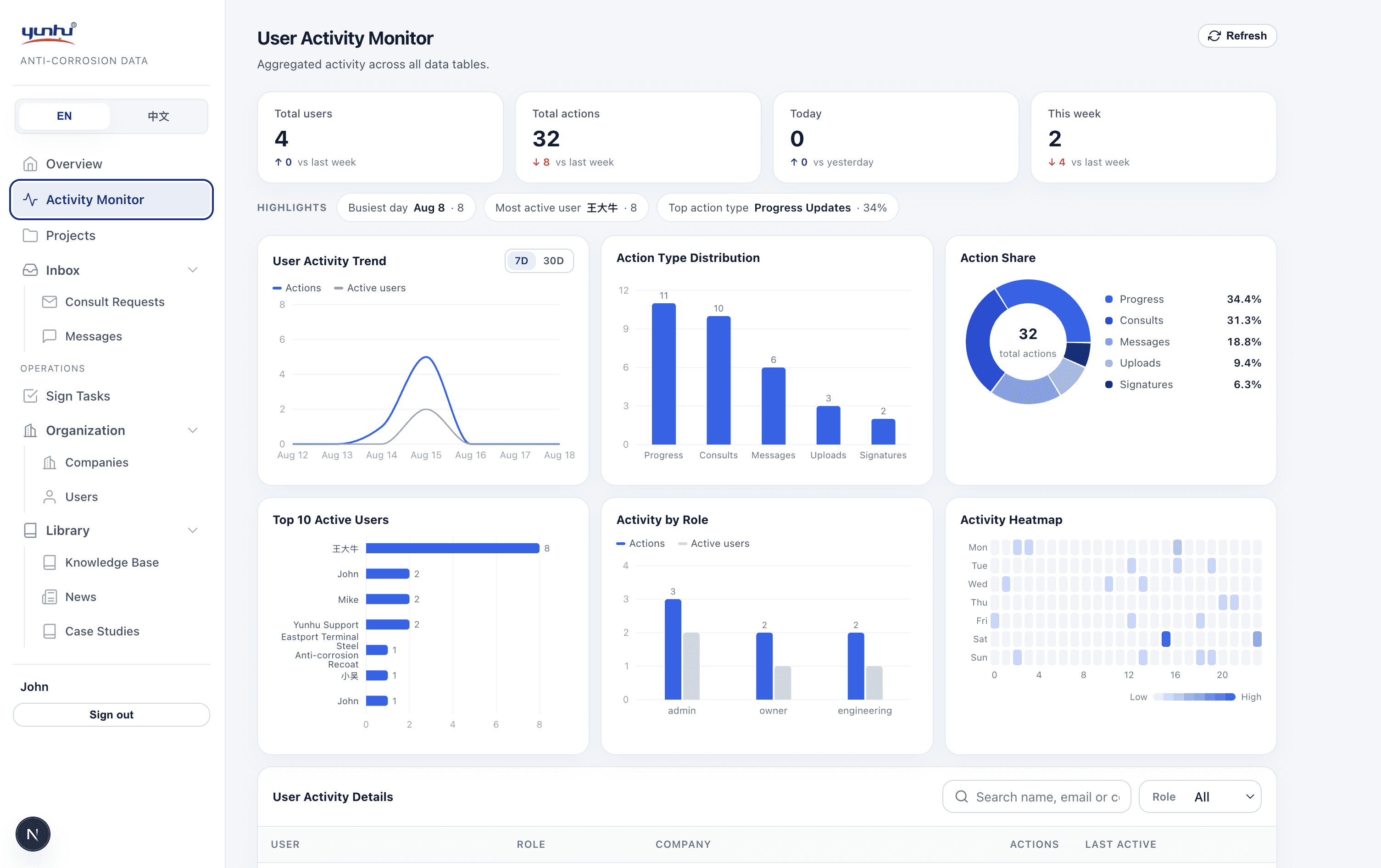


A workspace built around the next decision.
Yunhu is a mobile-first workspace for coordinating B2B after-sales service on industrial coatings.
Owners submit requests and track progress. Staff coordinate projects across teams. Field crews upload photos and documents that stay with the project record. One shared view of stage, pending tasks and next action — so the project record never gets lost.
User flow

Research
Competitive analysis
Existing tools only solve part of it.
Owners today rely on messaging apps, email, spreadsheets and PDF reports. Each is useful but none holds the full project record. [TBD specific competitor comparison]
[TBD interview quote]
[TBD attribution]

Insight 1:
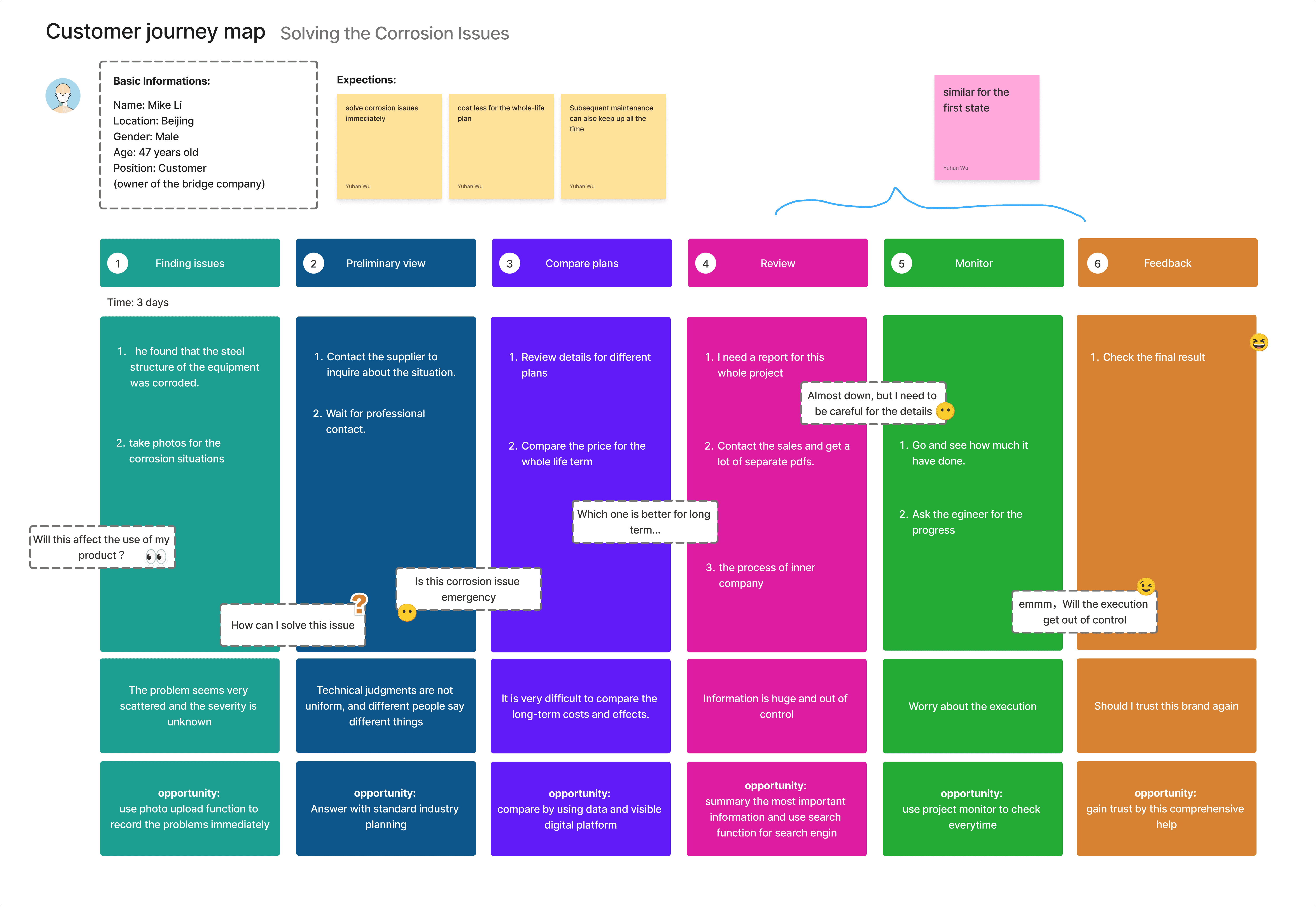
[TBD caption — early concept]
Owners want a project view, not a product catalogue.
Early concepts framed the home around picking a coating. The clearer job was coordinating evidence, progress and the next action on an owner’s site.
Owners open the app to see what is happening on their site today — stage, pending tasks, and the next action — before thinking about anything else. A catalogue-first home pushed that core job down the page and buried the decision owners actually needed to make.
[TBD interview quote]
[TBD attribution]
Design decision 1:
Project tracking is the home base
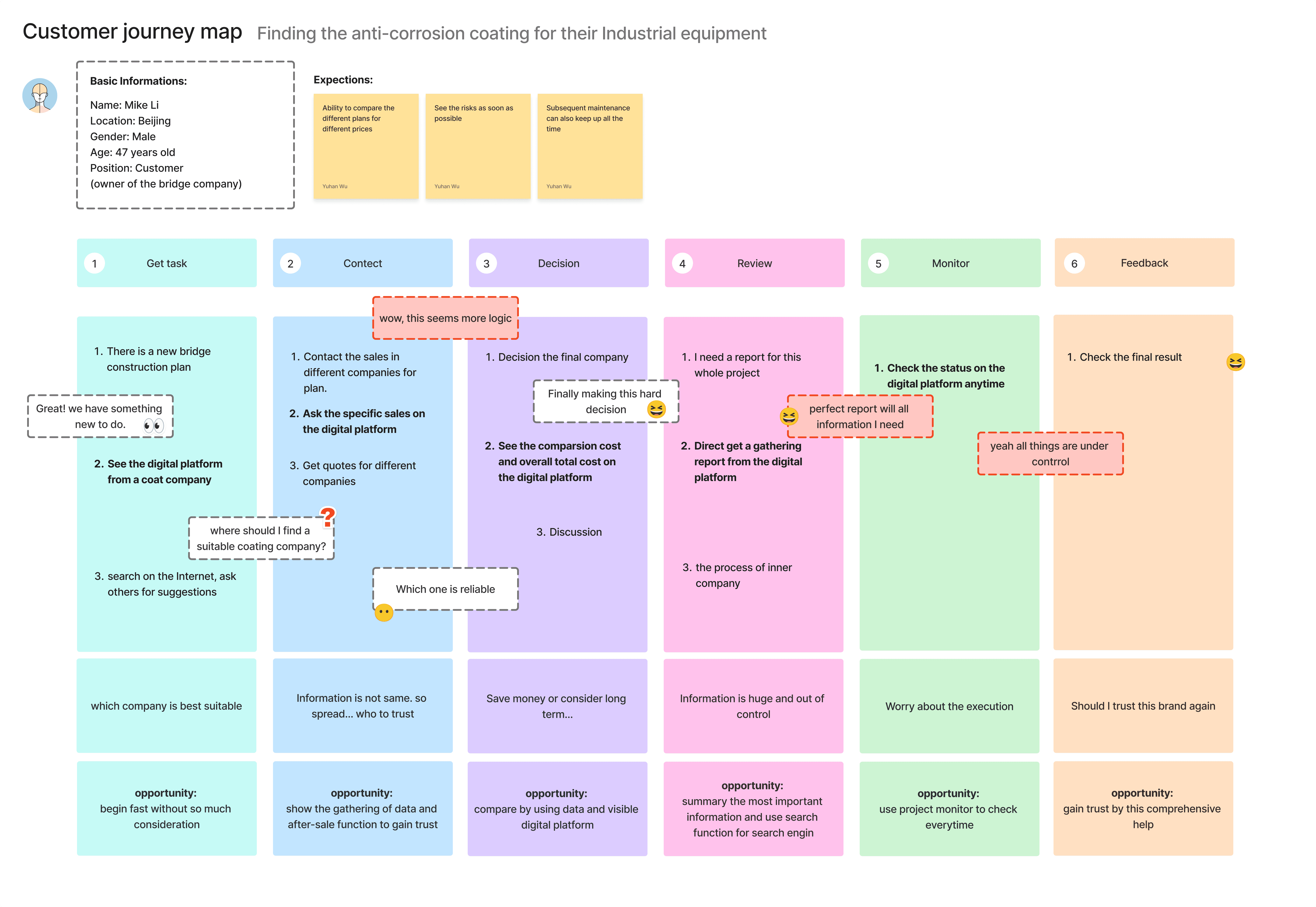

Insight 2:
A workspace, not a store.
Owners did not want a transactional app. They wanted one place that held the recurring job: requests, progress, documents and communication for each project.
A product catalogue would ship fast but miss the actual work. The recurring job on an owner’s site is coordination — pulling together field evidence, staff decisions and vendor documents around one asset over time.
[TBD interview quote]
[TBD attribution]
Decision design 2:
Project workspace, not a store
Instead of a catalogue, the app is a workspace. One record per project holds requests, status, documents and messages, with a staff Admin layer that keeps everything moving behind the scenes.

Insight 3:
The project record has to stay together.
Owners said evidence, decisions and documents already lived in different places. Pulling them back together — months or years later — was the painful part of the job.
Separate PDFs, chat threads and tracking tools lose context fast. Decisions need the evidence that produced them sitting right next to them, scoped to one project and visible to the right people.
[TBD interview quote]
[TBD attribution]
Decision design 3:
One shared project record

Reflection
The MVP demonstrates the end-to-end operating concept. User validation with owners, staff and field teams is the next step. Whether a shared project record changes how owners and staff coordinate day-to-day — and whether field crews upload evidence in the moment rather than batching it at the end of a job — these are open questions that only a live rollout can answer.