
A companion app for the next generation of Polaroid. Catch bad shots before you waste the film — and keep every good one, forever.
Role: Solo designer
Context: Personal project
Time: 10 weeks
Problem
Instant film costs ~$20 for 8 shots, so people save it for moments that matter. That’s exactly when a dark exposure or a shaky hand hurts most, and there’s no retake.
7 of 10 interviewees ( Polaroid lovers/ Gen Z) had lost a shot they cared about in their last pack.
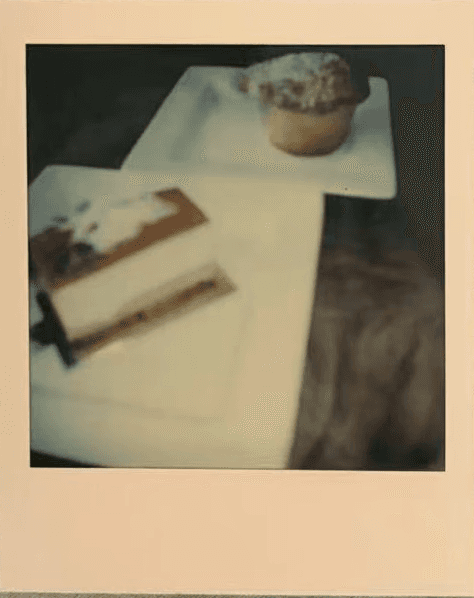
Underexposed and soft. A real failed shot from my own pack.
— Maggie, Polaroid user for 2 years


Product concept


An imagined next-gen Polaroid.
Every shot is saved digitally the moment you press the shutter, and syncs to the PoPo app automatically. Print it right away like a classic Polaroid, or save it, let PoPo fix it, and print when it’s right. Either way, the moment is never lost.
User flow

Competitive analysis
All 10 interviewees wanted to shoot more, but the cost of film held them back. They only pressed the shutter when a moment felt worth $2.50. 2 had even switched to the Instax mini Evo, just to preview photos before printing.
— Sarah, Recently bought Evo Fujifilm

Insight 1:

Original design (allow fully AI generation)
During interviews, we tested two directions: AI-generated scenes vs. AI-corrected originals. All 10 users rejected generation.
People use instant cameras to preserve moments that actually happened. Participants were comfortable with AI correcting issues such as poor exposure or slight blur, but did not want it to replace backgrounds, alter people, or generate details that were never present. They felt these changes would undermine the photo’s value as an authentic record.
— Michael, vintage photography enthusiast
Design decision 1:


Insight 2:
During the interviews, participants showed interest in repairing flawed Polaroid photos, but were unwilling to download an app dedicated to a single function.
They felt that installing and learning a new app just to occasionally fix exposure, blur, or light-leak issues would be time-consuming and inconvenient. Some participants also mentioned that, with the growing popularity of social media, they wanted an easier way to share their Polaroid photos.
— Sana, Polaroid-focused TikTok creator
Decision design 2:
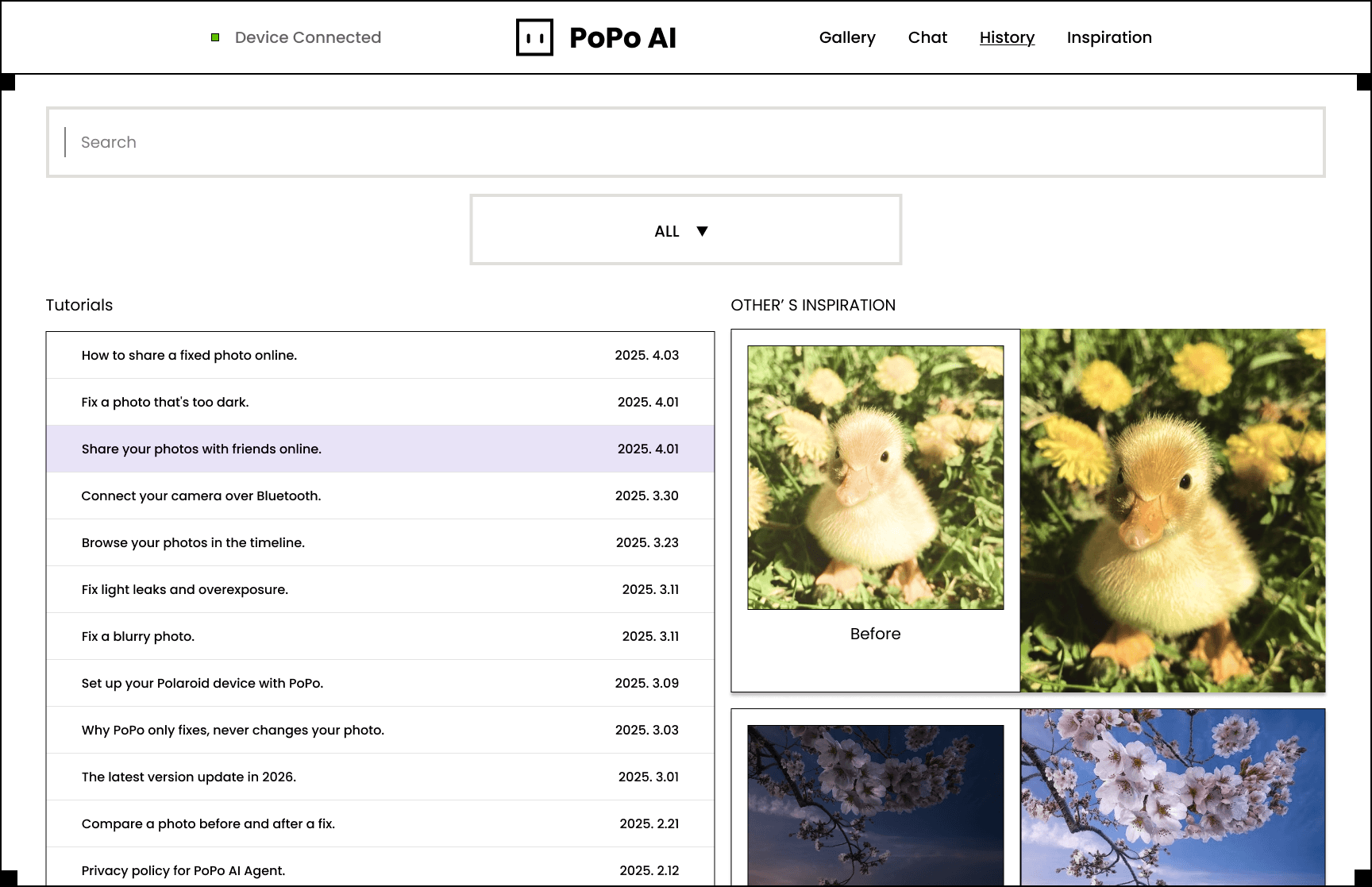
This insight led me to expand the original photo-repair tool into a web-based experience that combines photo restoration, inspiration, and community interaction.
Insight 3:
During interviews, participants expressed a desire to preserve digital copies of their Polaroid photos—not only for sharing, but also for long-term storage.
Physical photos can fade, become damaged, or get lost over time. Although some participants photographed their Polaroids with their phones, these digital copies often became scattered and difficult to organize. This insight led me to include a personal digital archive where users can save, organize, and revisit their Polaroid memories.
— Jay, Travel lover
Decision design 3:

Reflection
This flow is still only a prototype — no one has actually connected a camera over Bluetooth and told the AI to brighten a photo in real use. To test the concept, I went back to the same 10 interviewees from the research phase and walked them through the prototype. Their feedback confirmed that the timeline layout was intuitive, and that seeing a before/after comparison made them more comfortable reprinting. But whether AI suggestions actually reduce the anxiety of editing in real use, and how far users trust the AI to fix without over-correcting — these are still open questions that only a live product can answer.